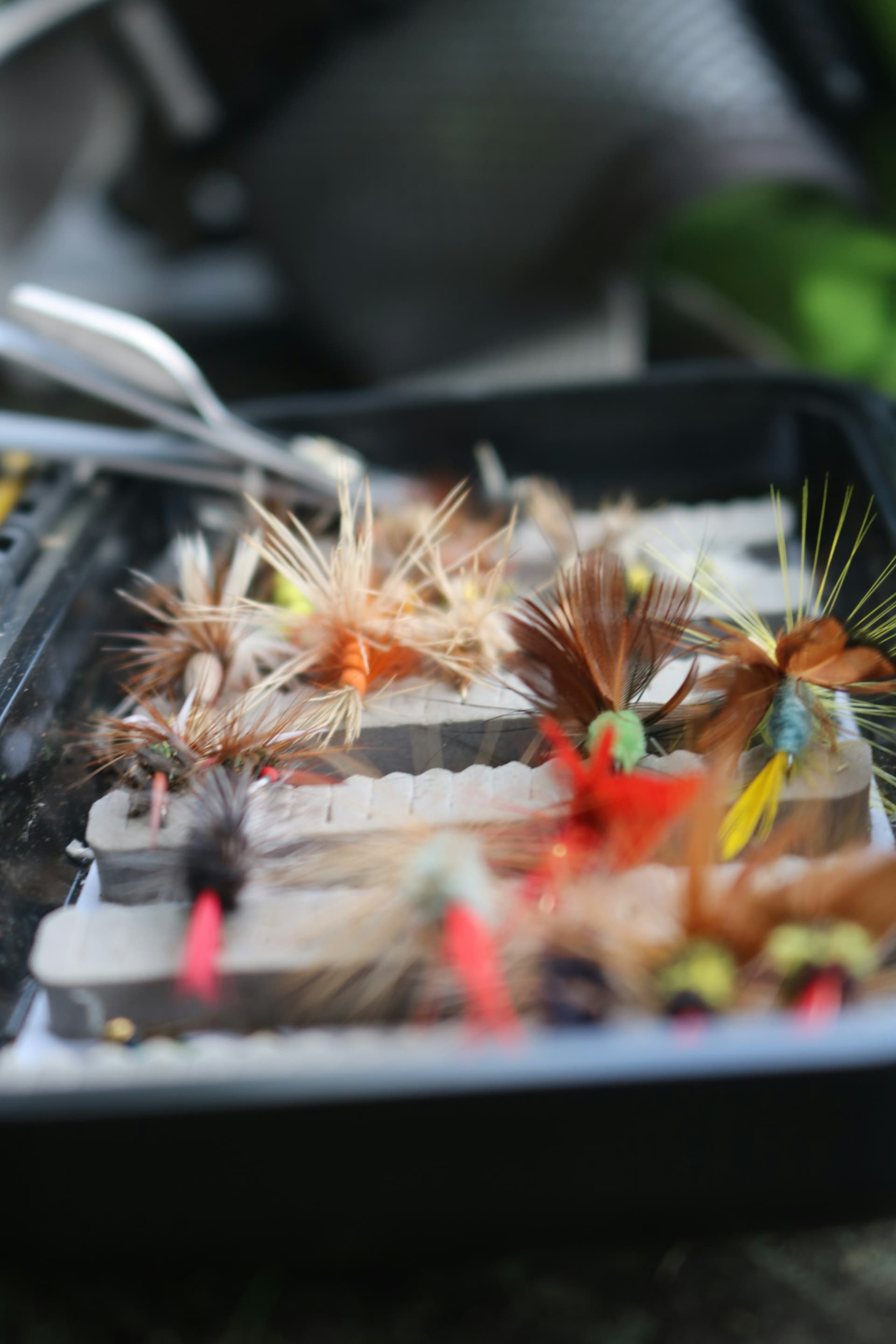
There is a moment every angler hits — usually about two years in — where you open your fly box and realize you have 300 flies and no idea what half of them are for. You have been buying patterns because they looked good in the shop, collecting freebies from friends, and hoarding flies you tied at 11 PM on a Tuesday. The box is full. Your confidence is not.
The solution is not more flies. It is fewer, better flies — organized by purpose, not by impulse.
The Three-Category System
Every fly in your box should fit into one of three categories: searching patterns, matching patterns, and confidence patterns.
Searching patterns are the flies you tie on when you arrive at the water and nothing is hatching. They are general attractors that suggest food without imitating anything specific. A Pheasant Tail nymph in size 14, a Hare's Ear, a basic Elk Hair Caddis — these are flies that work almost everywhere because they look like almost everything.
Matching patterns are for when you can see what the fish are eating. If Blue-Winged Olives are coming off, you need a BWO emerger and a dry in the right size. If caddis are bouncing on the surface, you need an Elk Hair Caddis or a CDC Caddis. You do not need twenty options. You need the right size and a decent silhouette.
Confidence patterns are the ones you reach for when nothing else is working. Every angler has them. Maybe it is a Purple Haze dry fly, or a Walt's Worm, or a Zebra Midge. It does not matter if it does not match any known insect — if you believe it works, you will fish it better.
Start With 20 Patterns
If you are building a box from scratch, start with these 20 and nothing else:
Nymphs (size 14-18): Pheasant Tail, Hare's Ear, Zebra Midge, Frenchie, Pat's Rubber Legs, Walt's Worm, Prince Nymph
Dry Flies (size 12-18): Elk Hair Caddis, Parachute Adams, Blue-Winged Olive, Stimulator, Griffith's Gnat
Streamers (size 6-10): Woolly Bugger (black), Woolly Bugger (olive), Zonker, Muddler Minnow
Terrestrials (size 10-14): Foam Beetle, Dave's Hopper, Ant Pattern
This gives you a nymph for every depth, a dry fly for every hatch window, a streamer for aggressive fish, and a terrestrial for warm weather. That is all you need.
Keep Duplicates, Not Variety
Once you know which patterns work on your home water, carry three to five of each in the sizes you use most. Running out of your best fly mid-hatch is worse than never having a pattern you have never used.
Organize by Use, Not by Type
Instead of organizing by dry, nymph, streamer — try organizing by situation. One row for early morning searching, one for midday hatches, one for evening rises. You will spend less time staring into your box and more time fishing.